Supply Type :

Post-tensioning repair is a process that involves reattaching or replacing cables in a post-tensioned concrete slab. This can be done to fix damage or to make structural changes to a building.

Post tensioned slab service contain a tendon, or steel cable, that runs crisscrossed throughout the center of the slab after the concrete has already hardened. As the poured concrete dries, the post-tensioned cables stretch and tighten, which applies a significant force to the concrete slab.
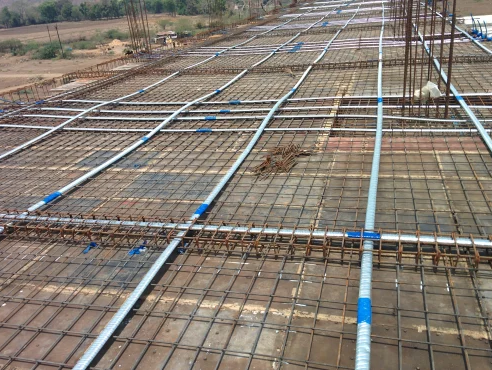
Bonded post-tensioned concrete is a technique where steel tendons (cables or bars) are placed inside a duct within the concrete and then tensioned after the concrete is poured and cured. After tensioning, a cementitious grout is injected into the duct, creating a strong bond between the tendon, grout, and surrounding concrete. This bond transfers the tension force from the steel to the concrete, increasing its strength and durability.
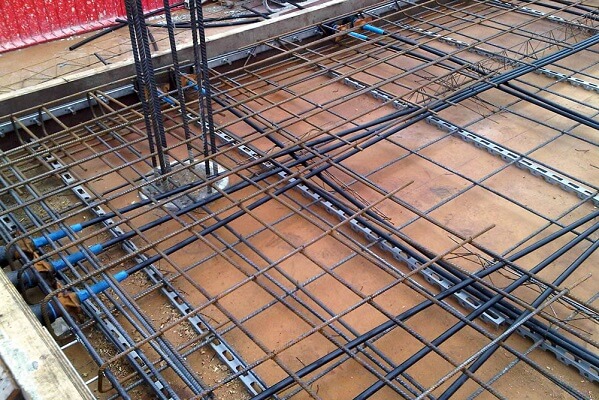
Unbonded post-tensioned concrete refers to a concrete structure reinforced with high-strength steel tendons that are not bonded to the surrounding concrete. These tendons, typically single strands or bars, are coated with corrosion-inhibiting grease and encased in a plastic sheath, allowing them to move freely relative to the concrete. This freedom of movement provides advantages in areas like seismic performance and life-cycle cost savings.