
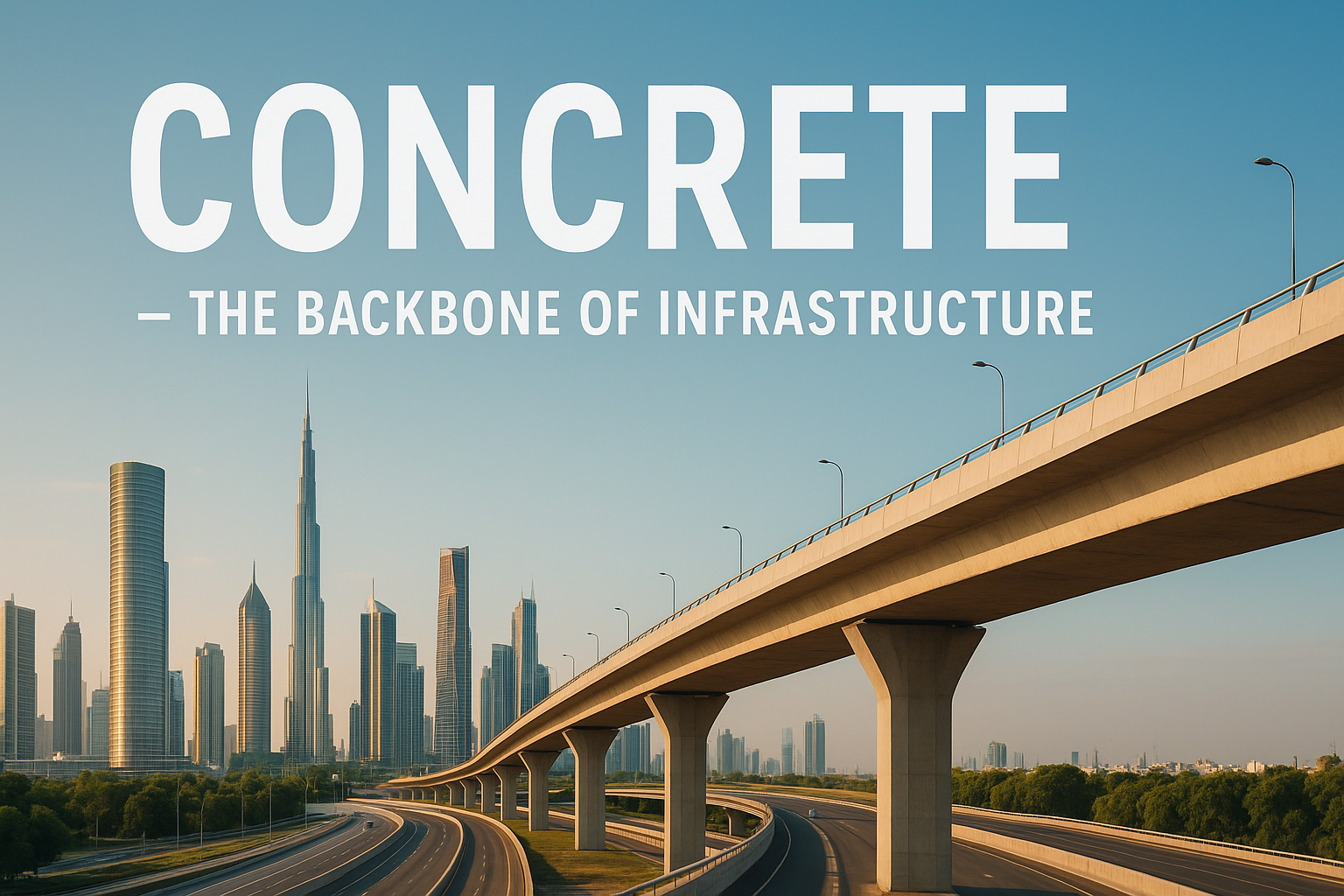
Why Concrete is Called the Backbone of Modern Infrastructure
The material that powers progress and builds the future
When we think of strong bridges, tall skyscrapers, durable roads, or long-lasting dams, one material comes to mind – concrete. From ancient Roman aqueducts to today’s smart cities, concrete has remained the most trusted construction material. But why is it often called the backbone of modern infrastructure? Let’s dive deeper.
Strength and Durability
Concrete is known for its compressive strength, which allows it to withstand enormous loads without breaking. This makes it the ideal choice for:
-
High-rise buildings that must bear vertical loads.
-
Bridges and flyovers that support heavy traffic.
-
Industrial floors that face continuous wear and tear.
Unlike many other building materials, concrete doesn’t rust, rot, or burn easily, which means structures last longer with minimum maintenance.
Versatility in Applications
Concrete can be shaped into almost any form before it sets, making it highly versatile. It is used in:
-
Roads and highways
-
Airports and seaports
-
Metro tunnels and flyovers
-
Water tanks, dams, and canals
-
Decorative flooring, facades, and landscaping
From simple houses to complex infrastructures, concrete fits everywhere.
Economic and Locally Available
Concrete is made from cement, sand, aggregates, and water – materials that are usually available locally. This makes it cost-effective and accessible, especially in developing countries like India where rapid urbanization demands affordable infrastructure.
Sustainability and Green Innovations
Traditionally, concrete production has been linked with high carbon emissions. But today, the industry is moving towards eco-friendly alternatives, such as:
-
Green concrete made with industrial waste like fly ash and slag.
-
Self-healing concrete that repairs its own cracks.
-
High-performance concrete that reduces maintenance needs.
These innovations make concrete a future-ready material for sustainable construction.
Longevity of Structures
Many ancient concrete structures, like the Roman Pantheon and aqueducts, still stand strong after thousands of years. This proves that when designed and maintained properly, concrete can last for centuries – making it truly the foundation of modern civilization.
Concrete in Nation-Building
Every major infrastructure project – expressways, metro networks, airports, smart cities – is built on concrete. It plays a vital role in:
-
Economic growth (by enabling transportation and trade).
-
Urban development (housing, offices, public spaces).
-
Disaster resilience (strong shelters, flood protection dams).
Without concrete, large-scale infrastructure as we know it would simply not exist.
Concrete is more than just a building material – it is the backbone of modern infrastructure. Its strength, durability, versatility, and affordability have made it indispensable for shaping the world around us. As new technologies like smart concrete and sustainable mixes evolve, its role will only become stronger in building the cities of tomorrow.