
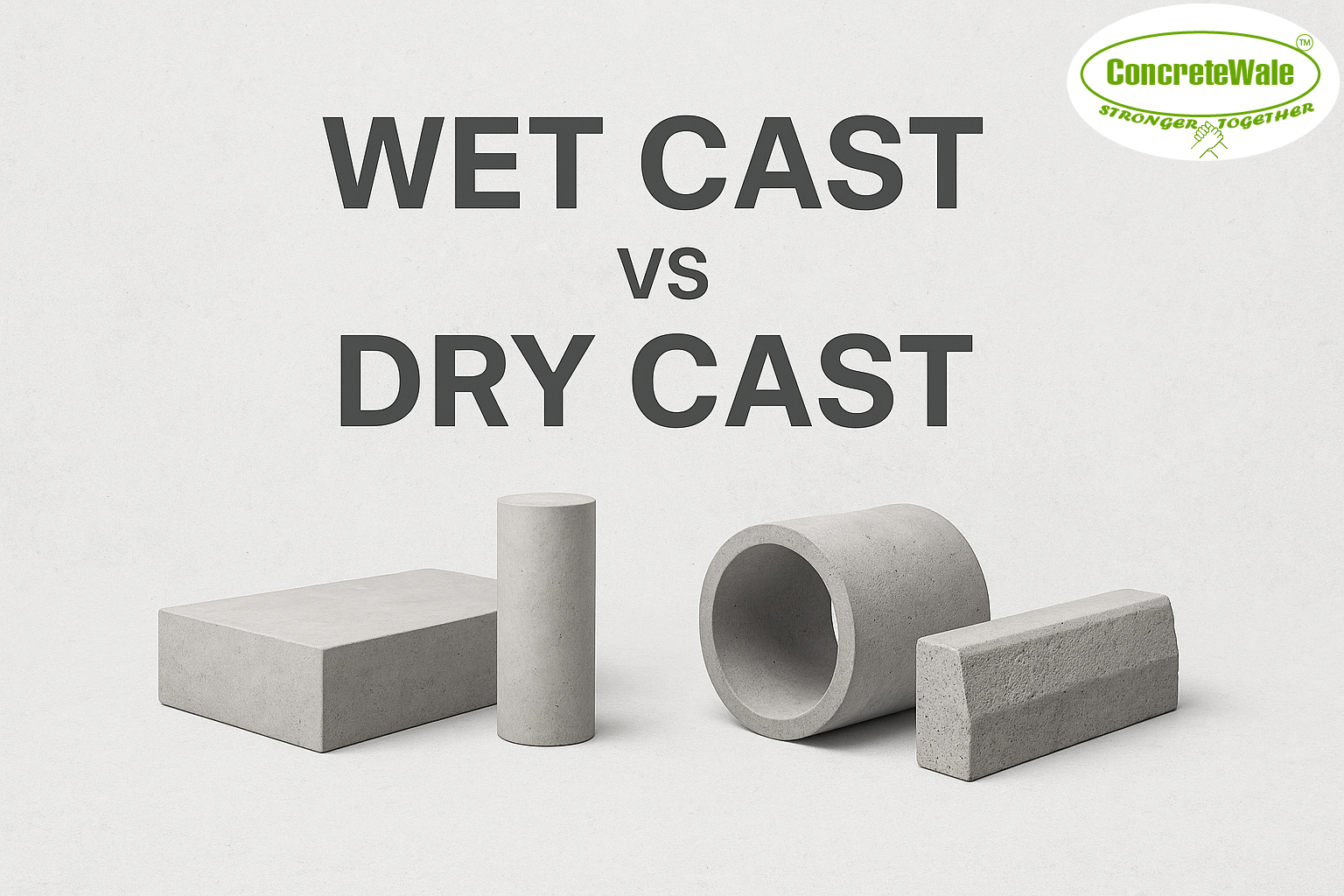
Wet Cast vs Dry Cast Concrete !
Concrete is used everywhere — from pipes and manholes to paving tiles and decorative elements. But the way concrete is cast plays a major role in its strength, finish, and production speed. Among the most commonly used manufacturing methods are Wet Cast and Dry Cast.
Both have unique advantages, and choosing the right one impacts quality, cost, and performance. This guide explains everything you need to know.
What is Wet Cast Concrete?
Wet Cast concrete uses a higher water-to-cement ratio, making the mix flowable and easier to pour into moulds.
It is often vibrated to remove air pockets and create a smooth surface.

Characteristics
-
High workability
-
Smooth, detailed finish
-
Slower curing time
-
Ideal for decorative or premium products
Where Wet Cast is Used?
-
Paver tiles
-
Garden and landscaping products
-
Precast slabs and beams
-
Decorative concrete items
-
Benches, railings, planters
What is Dry Cast Concrete?
Dry Cast concrete has a very low water-to-cement ratio, often called zero-slump.
Instead of flowing, the mix is compacted using vibration, pressing, or machinery.

Characteristics
-
Stiff mix with almost no slump
-
Fast production cycle
-
High density after compaction
-
Less detailed finish
Where Dry Cast is Used
-
Pipes
-
Manholes
-
Kerb stones
-
Hollow blocks
-
Boundary wall panels
-
Precast rings
Wet Cast vs Dry Cast: Key Differences !
| Feature | Wet Cast Concrete | Dry Cast Concrete |
|---|---|---|
| Water Content | Higher | Very low |
| Workability | Flowable | Zero slump |
| Finish | Smooth, detailed | Textured, basic |
| Curing Time | Slower | Faster |
| Production | Labour-intensive | Machine-friendly, fast |
| Strength | High | Very high after compaction |
| Best For | Decorative & custom moulds | Mass production items |
Advantages & Disadvantages!
Wet Cast Advantages
-
Excellent surface finish
-
Ideal for complex moulds
-
Strong bonding due to longer curing
Wet Cast Disadvantages
-
Slower production
-
Requires more labour
-
Higher cost per unit
Dry Cast Advantages
-
Fast and efficient manufacturing
-
Perfect for high-volume production
-
High durability and density
Dry Cast Disadvantages
-
Limited design flexibility
-
Less smooth finish
-
Requires specialised machinery
Which One Should You Choose?
The best method depends on your product and production needs.
Choose Wet Cast If You Want:
-
Premium finish
-
Decorative designs
-
Customised shapes
-
High detail and aesthetics
Choose Dry Cast If You Want:
-
Speed
-
Low cost per piece
-
Mass production
-
High structural strength
In short:
Wet Cast = finish & detail
Dry Cast = speed & durability
Both Wet Cast and Dry Cast methods play crucial roles in the precast concrete industry.
Wet Cast is perfect for visually appealing, customised products, while Dry Cast is the best choice for fast, durable, and high-volume manufacturing.