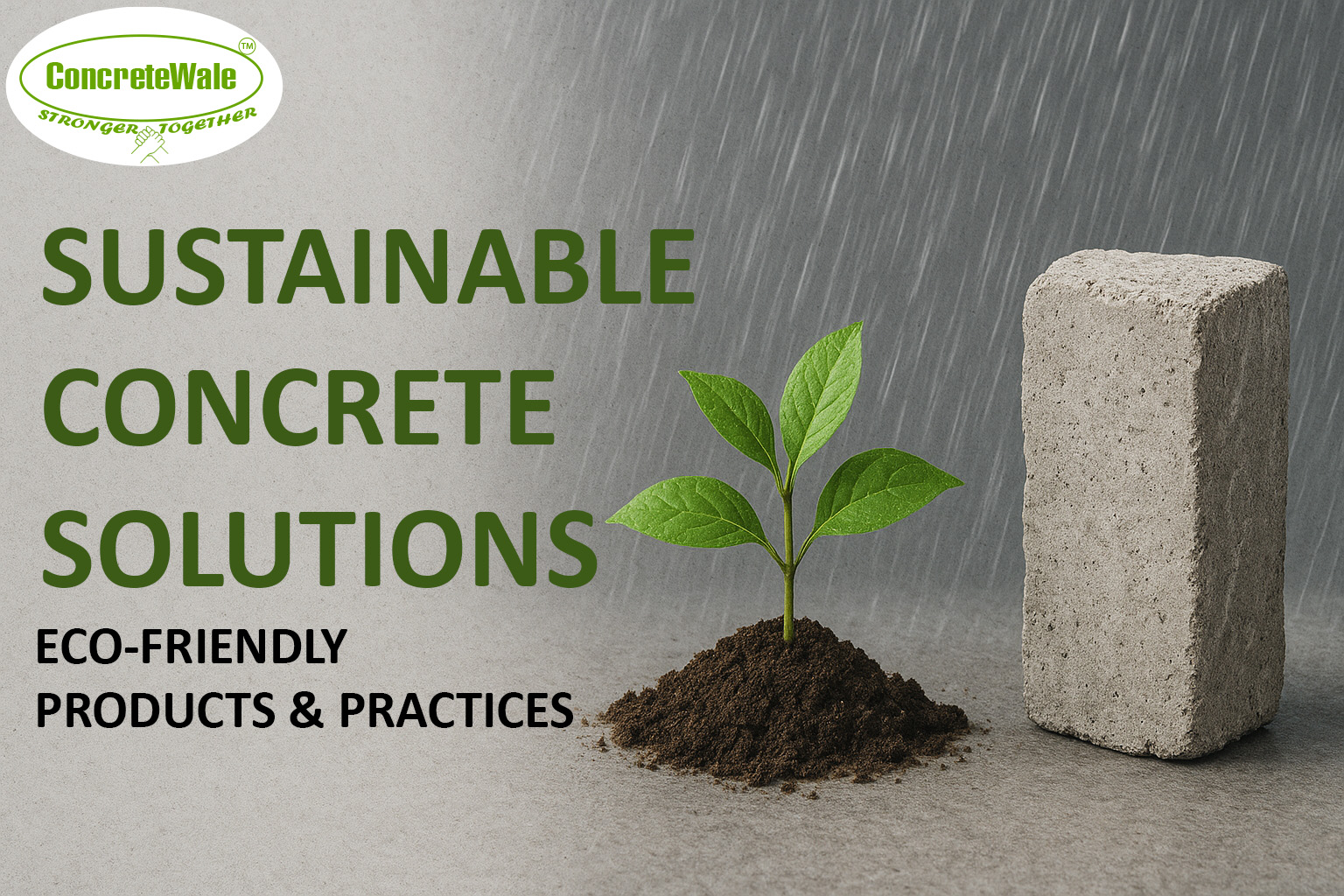
Sustainable Concrete Solutions: Eco-Friendly Products & Practices
Building a Greener Future with Eco-Friendly Concrete Products
Concrete has been the backbone of modern infrastructure, from skyscrapers to bridges and residential projects. However, traditional concrete production is one of the largest contributors to global CO₂ emissions, primarily due to cement manufacturing. As the construction industry moves toward sustainability and green building practices, innovative solutions are emerging to make concrete more eco-friendly, durable, and resource-efficient.
Why Sustainable Concrete Matters
-
Environmental Impact – Cement production accounts for nearly 8% of global carbon emissions.
-
Resource Conservation – Reducing water usage, recycling aggregates, and minimizing waste lowers the ecological footprint.
-
Regulatory Compliance – Green building codes and certifications (LEED, IGBC, GRIHA) increasingly require eco-conscious materials.
Eco-Friendly Concrete Products
1. Green Cement & Low-Carbon Cement
-
Uses alternative materials like fly ash, slag, or calcined clay to replace a portion of traditional Portland cement.
-
Reduces carbon emissions by 30–50%.
-
Improves long-term durability and resistance to chemical attacks.
2. Recycled Aggregate Concrete (RAC)
-
Incorporates crushed concrete, demolition waste, or industrial by-products.
-
Minimizes natural aggregate extraction and construction waste disposal.
3. Self-Healing Concrete
-
Infused with bacteria or microcapsules that activate when cracks appear.
-
Extends service life, reducing repair frequency and material use.
4. Permeable or Porous Concrete
-
Allows water to pass through, reducing urban flooding and improving groundwater recharge.
-
Used in pavements, parking lots, and green infrastructure projects.
5. High-Performance Concrete with Nano Materials
-
Nano-silica and other advanced admixtures improve strength while reducing cement content.
-
Leads to leaner, lighter structures with a smaller carbon footprint.
Sustainable Practices in Concrete Construction
1. Use of Supplementary Cementitious Materials (SCMs)
-
Fly ash, silica fume, and GGBS reduce cement consumption and enhance performance.
2. On-Site Waste Management
-
Collecting and recycling leftover concrete prevents landfill accumulation.
3. Energy-Efficient Curing Methods
-
Steam curing and water-efficient techniques save both time and resources.
4. Prefabrication & Modular Construction
-
Producing concrete elements off-site minimizes waste, improves precision, and reduces on-site emissions.
Benefits of Eco-Friendly Concrete Solutions
-
Lower Carbon Emissions – Contributing to global climate goals.
-
Cost Savings – Through reduced material use and longer-lasting structures.
-
Enhanced Performance – Better strength, durability, and resistance to environmental damage.
-
Green Building Certifications – Essential for projects seeking LEED or IGBC credentials.
Sustainable concrete solutions are no longer optional; they are the future of construction. By integrating eco-friendly products and green practices, contractors, builders, and developers can significantly reduce their environmental footprint while ensuring high-quality, long-lasting structures.
At Concretewale.com, we are committed to showcasing the latest innovations in concrete technology. Stay updated with our blogs for more insights into sustainable building solutions.