
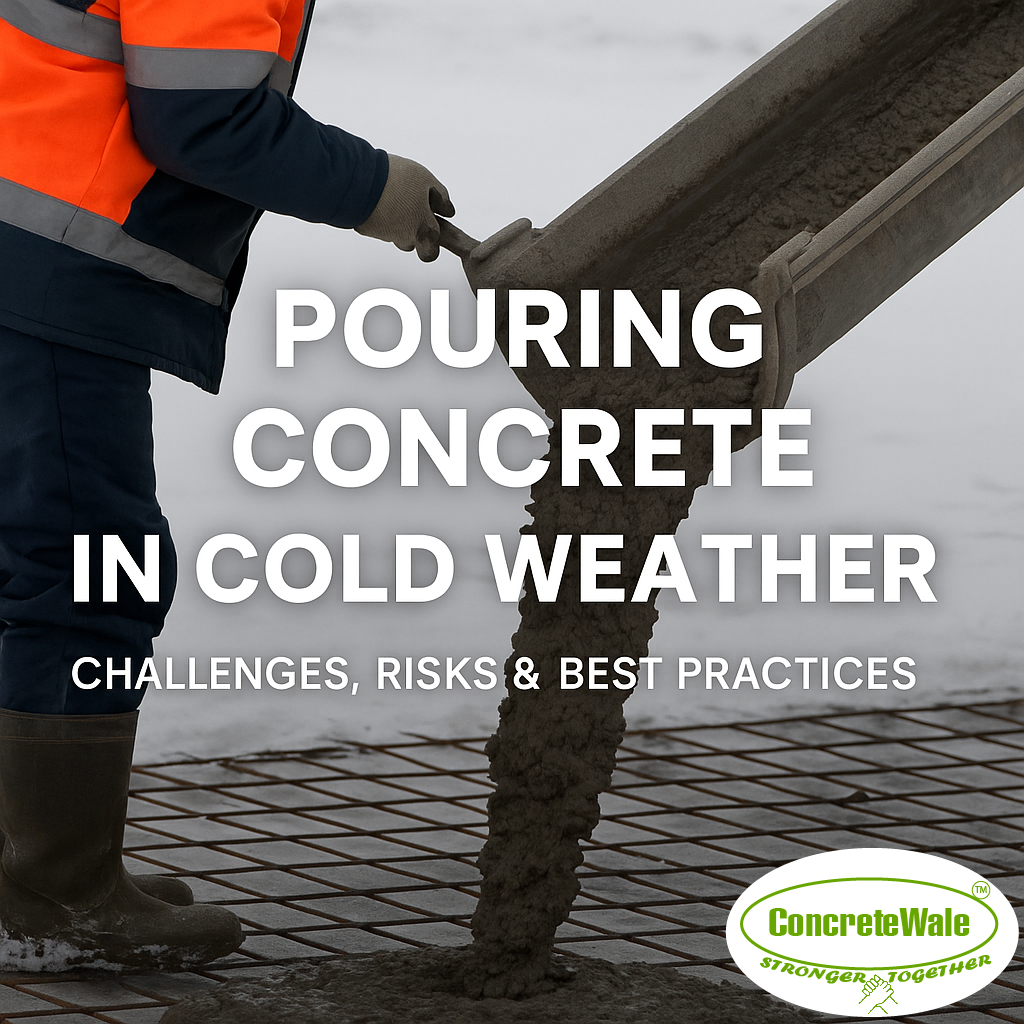
Pouring Concrete in Cold Weather: Challenges, Risks & Best Practices !
Cold weather can significantly affect concrete performance. When temperatures drop, concrete loses heat rapidly, making hydration slow or incomplete. If not handled correctly, this can lead to weak concrete, cracking, or even total failure of the slab.
Whether you’re a contractor, site engineer, or homeowner planning winter concreting, this guide will help you understand the risks and the best techniques for successful placement.
Why Cold Weather Affects Concrete?
Concrete gains strength through a chemical process called hydration, which requires heat. In cold temperatures, especially below 10°C, the pace of hydration slows drastically. Below 5°C, fresh concrete becomes extremely vulnerable.

Major Problems Caused by Cold Weather !
1. Slow Strength Gain.
Cold temperatures reduce the speed of hydration, delaying the setting time and extending the curing period.
2. Risk of Freezing.
If the concrete freezes before reaching around 500 psi strength (within the first 24 hours), the expanding ice crystals create internal cracks that permanently weaken the structure.
3. Poor Surface Quality.
Cold conditions can lead to:
-
Excessive bleeding water
-
Scaling or flaking
-
Dusty or weak surface layer
4. Placing on Frozen Ground.
Concrete placed on a frozen base will settle unevenly once the ground thaws, causing:
-
Settlement cracks
-
Loss of support
-
Reduced durability
Ideal Temperature Range for Concreting.
Concrete performs best when the mix, air, and surface temperatures are between:
10°C to 21°C
If ambient temperature is below 5°C, protective measures become essential.
Cold Weather Concreting Best Practices !
1. Use Warm Mixing Water or Heated Aggregates.
This helps maintain the concrete's initial temperature.
Target mix temperature should be 10°C–15°C after batching.
2. Choose Accelerators or Early-Strength Admixtures.
Chemical accelerators reduce setting time and help concrete gain early strength.
Examples:
-
Calcium nitrate accelerator
-
Non-chloride accelerators (safe for reinforced concrete)
3. Protect Concrete with Insulating Blankets or Tarps.
Cover freshly placed concrete to:
-
Retain heat
-
Prevent freezing
-
Maintain moisture levels
Curing blankets, tarpaulins, and insulated sheets work well.
4. Avoid Pouring on Frozen or Frosted Subgrade.
Thaw the surface using:
-
Ground heaters
-
Hot air blowers
-
Thermal blankets
A frozen base creates long-term stability issues.
5. Keep the Concrete Warm for 48–72 Hours.
The first two to three days are most critical.
Protection should remain until the concrete reaches safe early strength.
6. Reduce Water Content.
A lower water-cement ratio reduces freezing risk and increases strength.
Use a plasticizer or superplasticizer to maintain workability.
7. Control Wind and Snow.
Wind chill accelerates cooling.
Use windbreakers or temporary enclosures if needed.
Cold Weather Concreting Checklist !
Before Pouring:
-
Check temperature forecast for next 72 hours.
-
Ensure ground is not frozen.
-
Prepare curing blankets and tarps.
-
Add suitable admixtures.
-
Heat water/aggregates if required.
During Pouring:
-
Maintain concrete temperature above 10°C.
-
Avoid long delays in finishing.
-
Cover immediately after finishing.
After Pouring:
-
Keep covered for minimum 48 hours.
-
Monitor temperature under blankets.
-
Avoid de-icing salts on young concrete.
Common Mistakes to Avoid !
- Pouring on frost-covered or frozen ground.
- Using too much water for easier placement.
- Removing protective covers too early.
- Finishing the surface while bleed water is still present.
- Not considering temperature drop during night.
Benefits of Proper Cold Weather Concreting !
- Achieves required strength.
- Reduces cracking and scaling.
- Ensures long-term durability.
- Prevents costly repairs or structural failures.
Cold weather concreting is not risky when planned properly — in fact, with the right precautions, you can achieve excellent results even in winter conditions.
Pouring concrete in cold weather is challenging, but entirely manageable with the right approach.
By controlling temperature, using proper admixtures, preparing the base, and protecting the concrete during early curing, you can ensure strong, durable, and long-lasting concrete even in winter.