
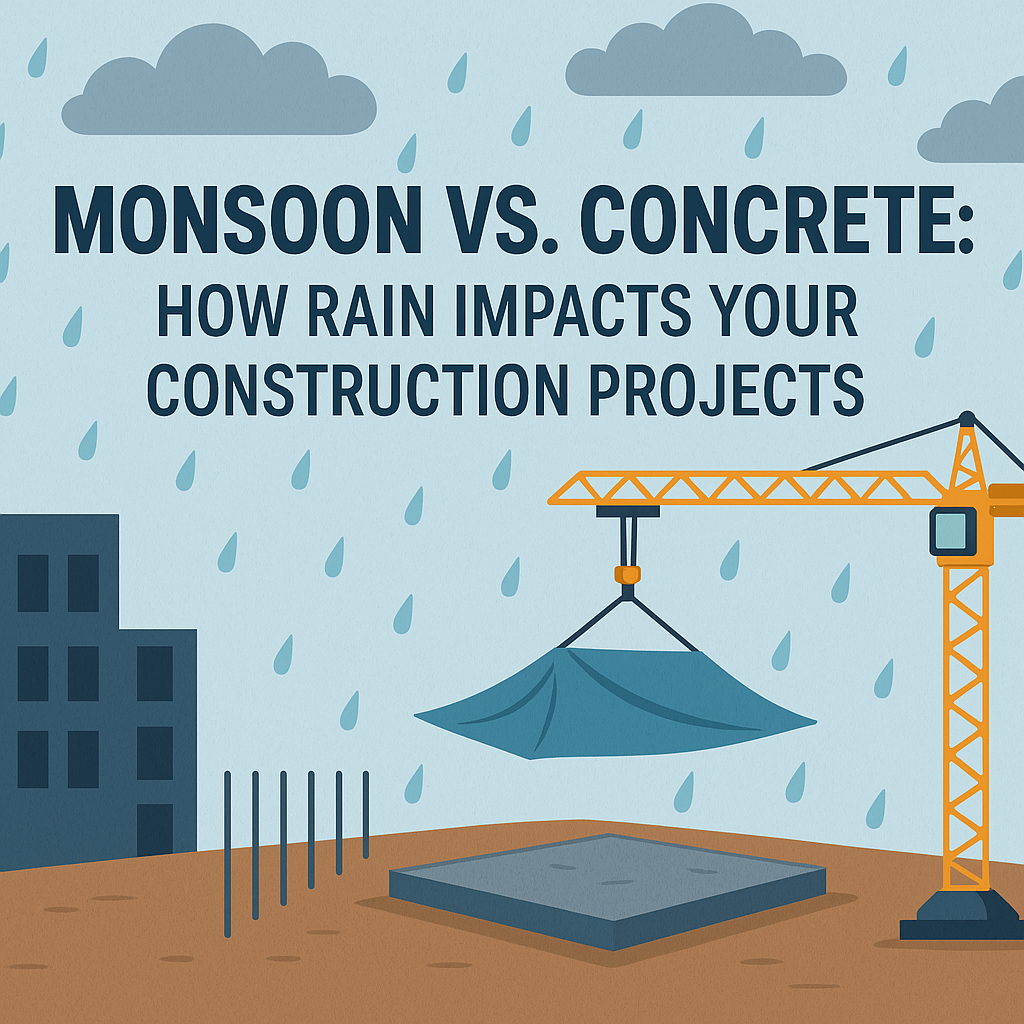
Monsoon vs. Concrete: How Rain Impacts Your Construction Projects
The monsoon brings relief from scorching summer heat, but for the construction industry, it also brings a series of headaches—especially when it comes to concrete work. Whether you're building a high-rise or laying a small residential slab, rainwater and humidity can seriously affect concrete strength, durability, and finish if not handled properly.
Let’s dive into how the rainy season impacts concrete—and what smart builders and homeowners can do to avoid costly mistakes.
Why Concrete and Rain Don't Mix Well
Concrete needs controlled moisture to cure properly, not uncontrolled showers or puddles. Here’s what rain can mess up:
1. Washout Effect
Freshly poured concrete can lose cement content due to heavy rainfall, leading to a weak surface layer and poor bonding.
2. Delayed Curing
Monsoons slow down the curing process, especially if there's standing water or constant humidity, making the surface prone to cracking later.
3. Surface Defects
Excess water creates a soft, dusty finish. You might notice a chalky texture, especially in driveways and open slabs.
4. Structural Weakness
If not protected well, wet weather during pouring can drastically reduce the strength of structural members like beams, columns, and slabs.
Smart Tips to Work with Concrete During Monsoons
Even though monsoon poses a challenge, work doesn't have to stop. Here are some field-tested best practices:
1. Use Rapid-Setting or Waterproof Concrete Mixes
Consider using plasticizers, waterproofing admixtures, or rapid-set compounds that help concrete resist early moisture exposure.
2. Cover Your Pour Area
Use tarpaulin sheets or waterproof coverings before and after pouring. Always have them on-site—even if the sky looks clear.
3. Delay the Pour When Necessary
If rain is forecast within 2–3 hours of a pour, postpone the casting. Better safe than redoing a slab!
4. Prepare Drainage Around the Site
Ensure water flows away from the construction area. Stagnant water near fresh concrete is a recipe for disaster.
5. Monitor Curing Time Closely
High humidity can make concrete appear cured when it’s not. Stick to your curing schedule (usually 7–28 days) and use curing compounds if needed.
What About Existing Concrete Structures?
Monsoon doesn’t just affect new builds. If your home or building shows signs like:
· Damp patches
· Peeling paint
· Cracks or efflorescence on concrete walls it’s time to check waterproofing, drainage, and surface treatments. Apply concrete sealers or coatings to prevent long-term damage.
Concrete is one of the toughest materials we use—but it’s not invincible, especially in its early stages. If you're planning or continuing construction this monsoon, always factor in weatherproofing your process.
The goal isn't to stop work—it’s to build smarter.