
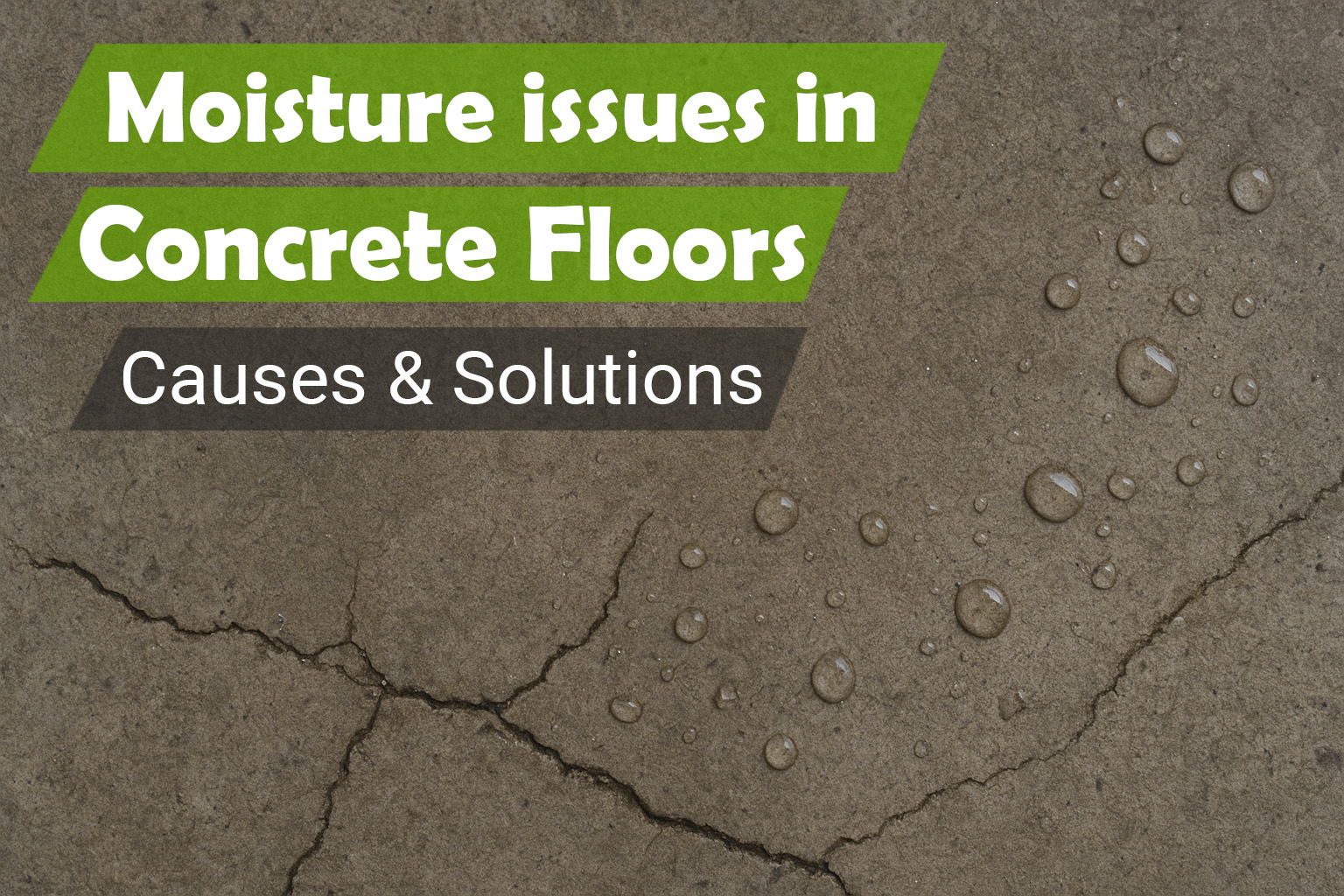
Moisture Issues in Concrete Floors – Causes & Solutions
Understanding Causes, Identifying Signs, and Applying Effective Moisture Control Solutions for Concrete Floors
Concrete floors are widely used in residential, commercial, and industrial structures due to their strength and durability. However, moisture problems can compromise performance, aesthetics, and even structural integrity. Uncontrolled moisture can lead to cracking, surface blistering, delamination, mold growth, and adhesive failures in flooring systems.
Why Moisture is a Problem for Concrete Floors
-
Weakens structural integrity by causing cracks and surface defects.
-
Damages flooring finishes like tiles, vinyl, or epoxy coatings.
-
Promotes mold and mildew growth, creating health hazards.
-
Leads to costly repairs if not detected early.
Major Causes of Moisture Issues
1. Improper Curing of Concrete
-
When concrete is not cured properly, moisture remains trapped inside.
-
Rapid drying can lead to shrinkage cracks, while excess moisture can migrate to the surface.
2. High Water-Cement Ratio
-
Excess water in the concrete mix increases porosity.
-
More porous concrete allows moisture to move easily through capillaries.
3. Lack of Moisture Barriers
-
Absence of vapor barriers beneath slabs allows groundwater or soil moisture to seep through.
-
Common in basements, industrial floors, and ground-level structures.
4. Hydrostatic Pressure
-
Water pressure from below the slab pushes moisture upward, especially in areas with a high water table.
5. Environmental Conditions
-
Humid climates or water exposure (e.g., kitchens, bathrooms, industrial plants) increase the risk of moisture-related issues.
6. Cracks and Surface Defects
-
Micro-cracks, shrinkage cracks, or construction joints provide pathways for moisture ingress.
Signs of Moisture Problems in Concrete Floors
-
Efflorescence – White, powdery deposits on the surface.
-
Blistering or Bubbling – Coatings or adhesives lifting from the surface.
-
Mold or Mildew Growth – Dark patches or foul odor.
-
Delamination – Surface layers peeling or flaking.
-
Flooring Failures – Tiles loosening, wood warping, or carpet staining.
Solutions to Prevent and Repair Moisture Issues
1. Moisture Testing Before Installation
-
Use methods like:
-
Calcium Chloride Test (ASTM F1869) – Measures moisture vapor emission rate (MVER).
-
Relative Humidity (RH) Testing (ASTM F2170) – Determines internal moisture levels.
-
2. Proper Curing Techniques
-
Maintain adequate moisture levels during curing using water spraying, wet coverings, or curing compounds.
-
Follow recommended curing periods (generally 7–28 days).
3. Applying Moisture Barriers
-
Install high-quality vapor barriers or retarders below slabs.
-
Use epoxy-based moisture mitigation systems for existing floors.
4. Surface Treatments
-
Concrete Sealers – Penetrating sealers (silane/siloxane) reduce moisture absorption.
-
Epoxy Coatings – Create an impermeable layer to block vapor transmission.
5. Repairing Cracks and Joints
-
Use epoxy injection, polyurethane grouts, or cementitious repair materials to seal cracks.
6. Improving Drainage
-
Proper slope design and drainage systems prevent water pooling around concrete floors.
Long-Term Maintenance Tips
-
Perform routine inspections for cracks, leaks, or coating failures.
-
Control indoor humidity levels, especially in basements and warehouses.
-
Ensure plumbing and waterproofing systems are functioning properly.
Moisture issues in concrete floors can lead to significant structural damage and costly repairs if left untreated. By understanding the causes, implementing proper preventive measures, and choosing the right repair techniques, you can extend the life of concrete floors and maintain their integrity.
Looking for reliable concrete moisture solutions?
Explore top products and services at Concretewale.com – your trusted directory for all things concrete.