Concrete vs. Cement: Why India Needs to Know the Difference
Breaking the Biggest Misconception in Indian Construction
In India, it is common to hear people say “cement road”, “cement bench”, or “cement products”. But here’s the truth: these are not cement products, they are concrete products. Cement is only one ingredient of concrete – yet, for decades, concrete has remained one of the most misunderstood materials in India.
This misconception not only misleads people but also hides the importance of one of the most widely used construction materials in the world. Let’s break this down and truly understand what concrete is, why it’s so significant, and how it surrounds us every single day.
What is Concrete?
Concrete is a composite material made of:
-
Cement – acts as the binder
-
Aggregates – coarse (gravel, crushed stone) and fine (sand)
-
Water – initiates the chemical reaction for hardening
When mixed in proper proportions, these ingredients form a strong, durable material that can be cast into various shapes and structures – from roads and bridges to countertops and decorative elements.
Cement: Just One Part of the Story
Cement, on the other hand, is a powdered binding material – usually made from limestone and clay – that reacts with water to form a paste, which holds aggregates together in concrete.
Think of it like this:
-
Cement = Flour
-
Concrete = Bread
You wouldn’t call bread “flour food”, right? Similarly, we shouldn’t call concrete a cement product.
Concrete in Our Daily Lives
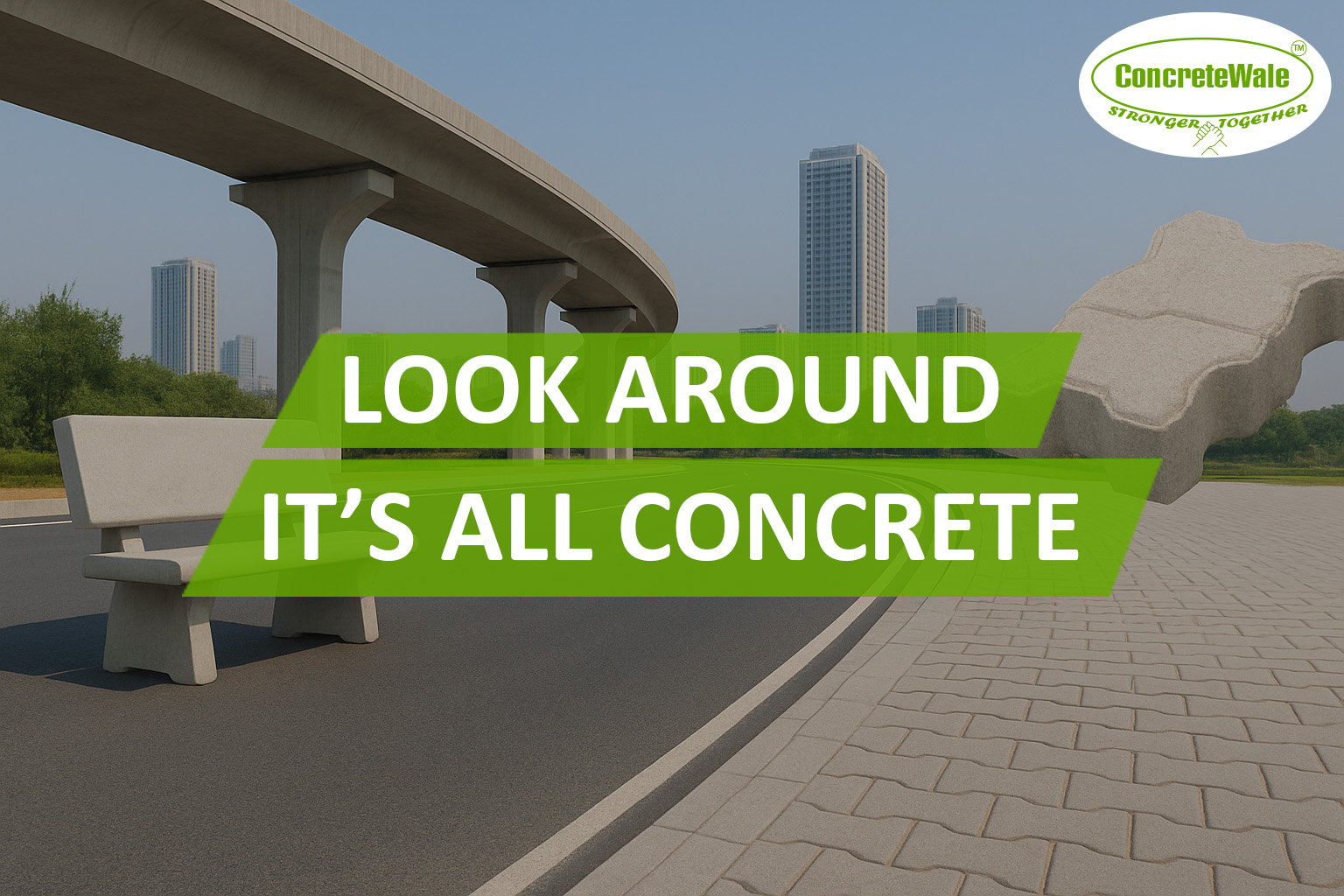
Most people don’t realize how much concrete shapes our surroundings. Some examples include:
-
Roads and pavements
-
Residential and commercial buildings
-
Bridges, flyovers, and metro structures
-
Boundary walls, precast panels, and paver blocks
-
Water tanks, drains, and culverts
-
Benches, tables, decorative items, and more
In fact, after water, concrete is the most consumed material on Earth.
Why is Concrete So Unrecognized in India?
-
Language Habit – For decades, the word “cement” has been used synonymously with concrete in everyday speech.
-
Lack of Awareness – People rarely learn about construction materials unless they work in the industry.
-
Cement Marketing – Cement brands advertise heavily, creating a stronger recall value than concrete itself.
Why It’s Important to Recognize Concrete?
Understanding concrete is not just about using the right terminology – it’s about recognizing its role in:
-
Infrastructure Development – Roads, bridges, and buildings depend on it.
-
Innovation – Self-healing concrete, decorative concrete, ultra-high-performance concrete, and more are changing construction technology.
-
Sustainability – Proper use of concrete can reduce carbon footprints with techniques like green concrete, recycled aggregates, and geopolymer concrete.
The Future of Concrete in India
India is witnessing rapid urbanization. From smart cities to high-speed rail projects, concrete will play a central role. But to innovate, use better materials, and build stronger, longer-lasting structures, people must first understand what concrete truly is.
Next time you see a road, a paver block, or a building façade, remember – it’s not cement you are looking at, it’s concrete. By spreading awareness, we can ensure that this versatile, essential material gets the recognition it deserves.