
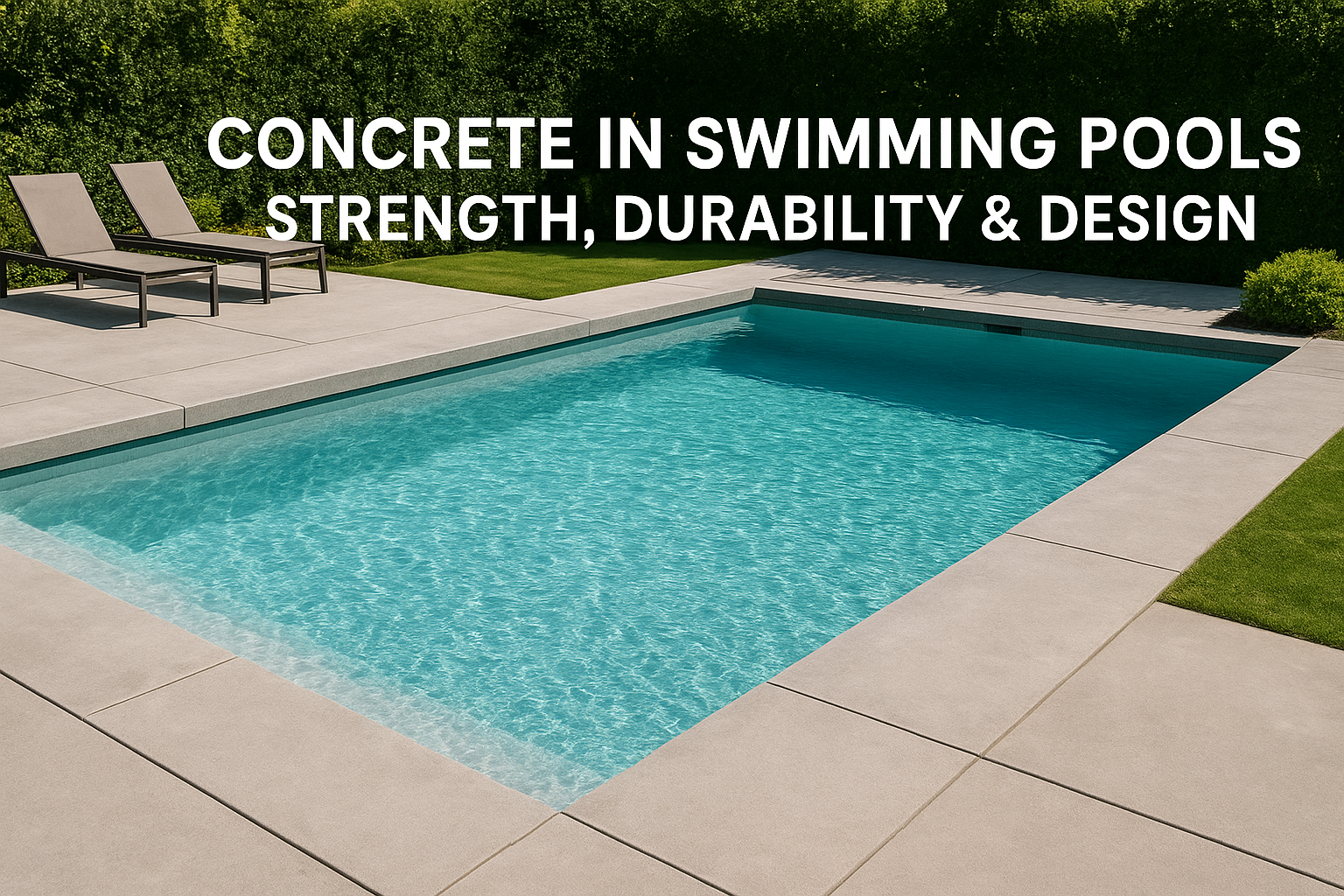
Concrete in Swimming Pools: Strength, Durability & Design
Exploring the Role of Concrete in Building Long-Lasting and Stylish Pools
Swimming pools have always been a symbol of luxury, relaxation, and fitness. Whether it’s a private villa, a residential complex, a resort, or a sports facility, the demand for strong and long-lasting swimming pools has been increasing across India and the world. Among all construction materials, concrete remains the most dedicated and trusted choice for swimming pool structures.
In this blog, we’ll explore the importance of concrete in swimming pools, the types used, construction process, advantages, and the latest trends that make concrete the backbone of modern pools.
Why Concrete is the Backbone of Swimming Pools
Concrete has stood the test of time as the most reliable pool construction material because of its unique combination of strength, flexibility, and longevity. Some of the key reasons include:
-
Strength & Durability: Concrete can easily withstand water pressure, soil loads, and frequent use. A properly built concrete pool lasts for decades.
-
Design Flexibility: Unlike fiberglass or vinyl, concrete allows free-form pool designs – from rectangles to curves, infinity edges, and customized depths.
-
Water Resistance: With the right admixtures and waterproofing treatments, concrete ensures a leak-proof and safe pool.
-
Longevity: Many concrete pools remain fully functional even after 30–40 years with proper maintenance.
Why Concrete is the Backbone of Swimming Pools
Concrete has stood the test of time as the most reliable pool construction material because of its unique combination of strength, flexibility, and longevity. Some of the key reasons include:
-
Strength & Durability: Concrete can easily withstand water pressure, soil loads, and frequent use. A properly built concrete pool lasts for decades.
-
Design Flexibility: Unlike fiberglass or vinyl, concrete allows free-form pool designs – from rectangles to curves, infinity edges, and customized depths.
-
Water Resistance: With the right admixtures and waterproofing treatments, concrete ensures a leak-proof and safe pool.
-
Longevity: Many concrete pools remain fully functional even after 30–40 years with proper maintenance.
Construction Process of a Concrete Swimming Pool
Building a concrete swimming pool requires precision and multiple stages:
-
Excavation & Base Preparation – The site is dug to the required shape and depth.
-
Steel Reinforcement (Rebar Cage) – Provides tensile strength and prevents structural failures.
-
Shotcrete/Gunite Application – Concrete is sprayed to form the pool shell.
-
Waterproofing Treatment – Use of crystalline admixtures, membranes, or epoxy coatings to prevent leakage.
-
Curing Process – Proper curing ensures maximum strength and crack resistance.
-
Interior Finishing – Options include plaster, ceramic tiles, mosaics, polished concrete, or stone finishes.
Role of Admixtures & Chemicals in Pool Concrete
To ensure durability and resistance against constant water exposure, specific chemicals and admixtures are added to pool concrete:
-
Waterproofing Admixtures – Hydrophobic or crystalline types reduce permeability.
-
Plasticizers/Superplasticizers – Improve workability without excess water.
-
Shrinkage-Reducing Admixtures – Minimize cracking during curing.
-
Epoxy Coatings & Sealers – Provide surface protection and resist chemical attacks (chlorine, cleaning agents).
Advantages of Concrete Pools Over Other Types
Compared to fiberglass or vinyl pools, concrete pools offer:
-
Unlimited Design Options: Any shape, depth, or feature (steps, ledges, infinity edges).
-
Superior Strength: Stronger shell that withstands soil pressure and long-term use.
-
Luxury Finishes: Allows customization with tiles, quartz, glass mosaics, or decorative concrete.
-
Adaptability to Climate: Better performance in India’s varied weather conditions.
Maintenance of Concrete Swimming Pools
While concrete pools are strong, they require regular maintenance for long-lasting performance:
-
Inspect waterproof coatings and joints periodically.
-
Repair cracks immediately using epoxy grout or sealants.
-
Maintain proper water chemistry to avoid staining or algae growth.
-
Schedule re-plastering or tile replacement every 10–15 years if required.
Latest Trends in Concrete Swimming Pools
Concrete’s flexibility allows builders and designers to adopt new innovations, such as:
-
Infinity Pools – Seamless edge designs, often seen in luxury resorts.
-
Eco-Friendly Concrete Pools – Use of green admixtures and recycled aggregates.
-
Smart Pool Systems – Automated filtration, cleaning, and monitoring systems.
-
Decorative Concrete Finishes – Stamped, polished, or exposed aggregate for premium aesthetics.
Concrete has proven itself as the most dedicated and reliable material for swimming pools. Its unmatched strength, design flexibility, and ability to adapt to modern waterproofing and finishing technologies make it the preferred choice for architects, builders, and homeowners alike. With the right admixtures and proper maintenance, a concrete pool can remain a safe, beautiful, and enjoyable investment for decades.