
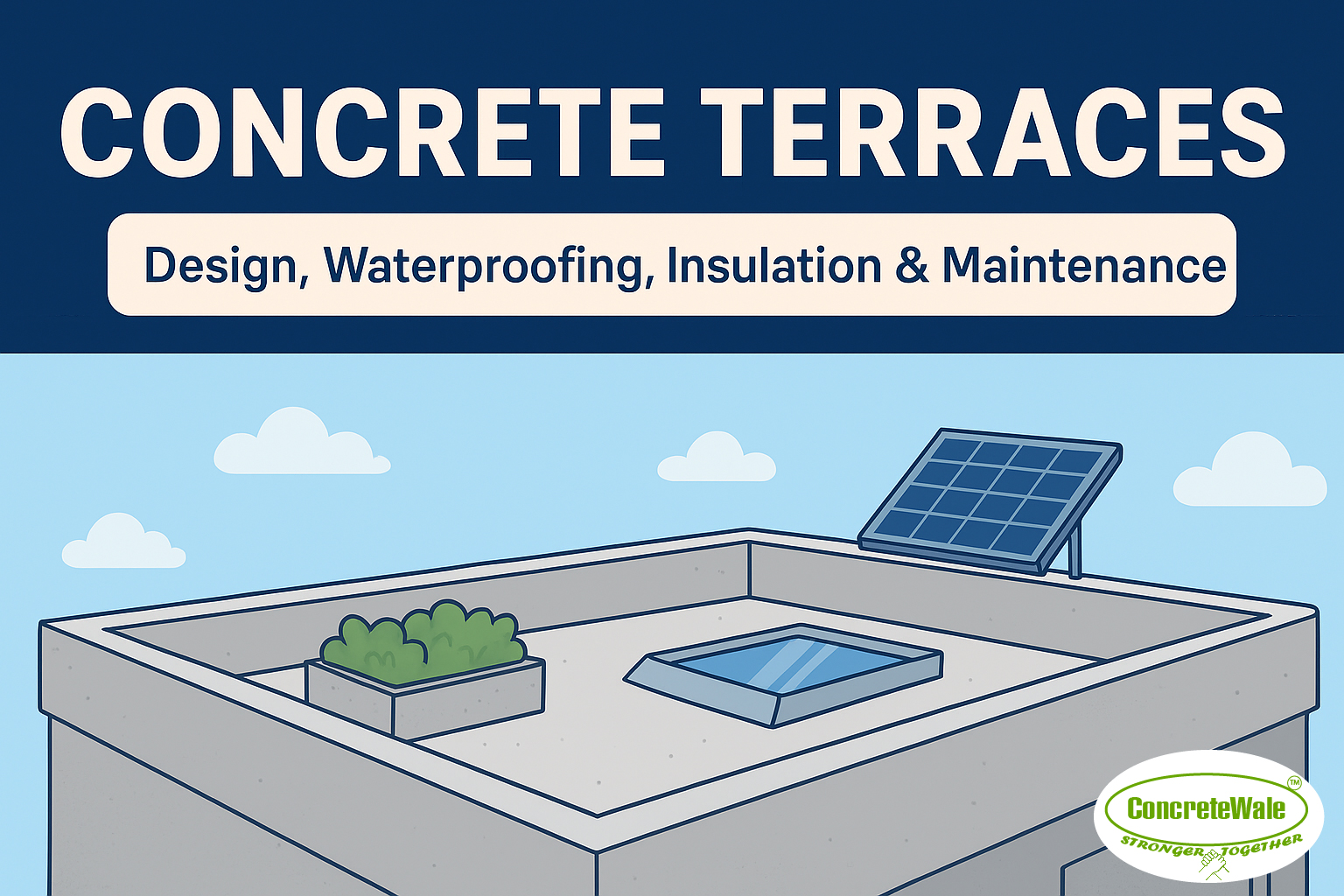
Concrete Terraces – Everything You Need to Know
Key Factors for Strong and Efficient Terraces
The terrace is more than just the topmost part of a building — it’s an important functional and lifestyle space. Whether used for gatherings, gardening, solar panel installation, or simply as a protective cover for your home, a concrete terrace plays a vital role in durability, safety, and comfort.
Concrete is the most widely used material for terraces due to its strength, cost-effectiveness, and flexibility. However, many homeowners and builders underestimate the need for proper design, waterproofing, and maintenance. In this blog, we’ll cover everything you need to know about concrete terraces — from construction basics to modern sustainable solutions.
1. Design Considerations for Concrete Terraces
Before constructing a terrace, certain design elements must be taken into account:
-
Load-bearing capacity: Terraces must be designed to bear live loads (people, furniture, water tanks, solar panels).
-
Slope for drainage: A slight slope (1:100) is necessary to prevent water stagnation.
-
Thermal comfort: Concrete absorbs heat, so provision for insulation or reflective coating should be considered.
-
Aesthetics: Terraces can be finished with tiles, decorative coatings, or left plain for future customization.
2. Construction Process of Concrete Terraces
The quality of construction directly affects durability.
-
Materials: Cement, sand, aggregates, reinforcement steel, and sometimes admixtures for waterproofing.
-
Formwork & Reinforcement: Proper reinforcement bars are laid to handle loads and prevent cracking.
-
Concreting: Concrete should be placed, compacted, and cured well to achieve strength.
-
Curing: At least 7–14 days of curing ensures durability and prevents early shrinkage cracks.
3. Waterproofing of Concrete Terraces
One of the most critical aspects of a terrace is waterproofing. Without it, water seeps into the slab, causing dampness, leaks, and even structural deterioration.
Popular Waterproofing Methods
-
Brickbat Coba Method – Traditional method using brick pieces and waterproof mortar.
-
Liquid Membrane Coating – Polymer or acrylic-based coating applied like paint.
-
Bituminous Coating – Tar/bitumen-based protective layer.
-
Polyurethane (PU) & Epoxy Coating – Modern coatings with long life and elasticity.
-
Crystalline Waterproofing – Chemicals that react inside concrete to block water pathways.
Choosing the right waterproofing depends on budget, climate, and terrace usage.
4. Thermal Insulation for Terraces
Since terraces are directly exposed to sunlight, heat absorption is a major issue.
-
Cool roof coatings: White reflective coatings reduce surface temperature.
-
Insulation boards or foam: Placed under tiles to improve thermal comfort.
-
Clay or reflective tiles: Prevent heat transfer indoors.
This not only makes the house cooler but also reduces electricity bills from air conditioning.
5. Common Problems in Concrete Terraces
-
Cracks due to poor curing or thermal expansion.
-
Water leakage because of damaged waterproofing layers.
-
Efflorescence (white deposits) due to water seepage.
-
Blocked drainage outlets leading to water stagnation.
6. Maintenance of Concrete Terraces
Regular upkeep increases terrace life:
-
Inspect for cracks or water seepage annually.
-
Clean drainage points before the monsoon.
-
Re-apply waterproofing every 5–7 years.
-
Avoid drilling or making holes without proper sealing.
7. Sustainable & Modern Practices
Concrete terraces today are being adapted for eco-friendly and functional upgrades:
-
Green Roofs / Terrace Gardens – Adding soil and plants reduces heat and improves aesthetics.
-
Solar Panel Installation – Terraces provide excellent space for solar energy.
-
Eco-friendly Waterproofing – New coatings are more durable and sustainable.
8. Cost Factors
The cost of a concrete terrace depends on:
-
Thickness of slab and reinforcement.
-
Type of waterproofing applied.
-
Choice of finish (tiles, coating, garden setup).
On average:
-
Waterproofing → ₹40–₹150 per sq.ft (depending on method).
-
Cool roof tiles → ₹70–₹120 per sq.ft.
-
Green roof setup → Higher cost but long-term benefits.
A well-designed and properly maintained concrete terrace is not just a roof over your head — it’s a space that adds comfort, functionality, and value to your property. By ensuring correct design, waterproofing, insulation, and periodic maintenance, you can enjoy a durable and leak-free terrace for decades.
At Concretewale.com, we bring together knowledge, products, and services for everything concrete — from construction materials to waterproofing solutions. Whether you’re a homeowner, contractor, or architect, we help you make smarter choices for your projects.