
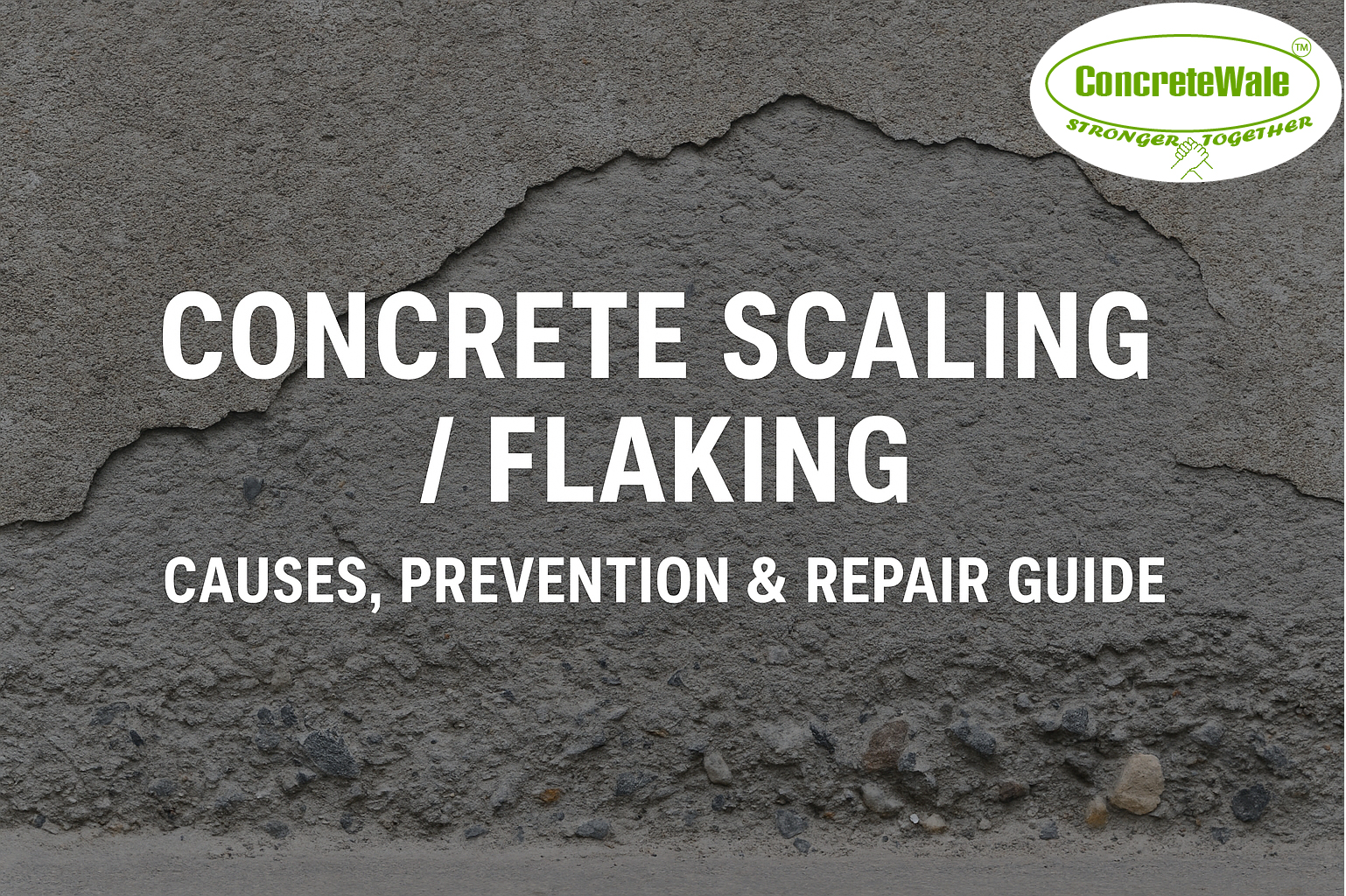
Concrete Scaling(Flaking): Causes, Prevention & Repair Guide!
Concrete is known for its strength and durability, but even the most well-built structures can face one common surface problem—scaling (also called flaking or surface spalling). This usually affects driveways, pavements, terraces, parking areas, and exposed slabs. While it may start as a cosmetic issue, it can gradually lead to deeper deterioration if not handled properly.
What is Concrete Scaling?
Concrete scaling or flaking is the process where the top surface layer peels, chips, or breaks away, exposing the rough aggregates beneath. It usually affects a depth of 1–5 mm, making it a surface deterioration issue, unlike deep structural spalling.
Typical signs include:
-
Thin flakes coming off the slab
-
Rough, patchy appearance
-
Shallow pits or depressions
-
Powdery residue
Major Causes of Concrete Scaling !

1. Freeze–Thaw Damage
When water seeps into concrete and freezes, it expands and pushes the surface outward. Repeated cycles cause the top layer to peel or break.
2. Poor Curing
If concrete isn't kept moist during early days, it develops a weak, brittle surface that scales easily.
3. De-icing Salts & Chemicals
Chlorides and aggressive salts penetrate the surface, accelerating breakdown—especially during winters.
4. High Water–Cement Ratio
Extra water added for easy workability weakens the top layer, making it prone to flaking.
5. Over-Finishing the Surface
Excessive troweling traps bleed water under the surface, creating a fragile layer that deteriorates later.
6. Low-Quality Mix or Wrong Materials
Improper mix design, lack of air entrainment (in cold regions), or substandard aggregates contribute to scaling.
How to Prevent Concrete Scaling / Flaking ?
Preventing scaling starts at the construction phase and continues through regular maintenance.
1. Proper Curing
Cure the concrete continuously for at least 7 days.
Use curing blankets, water spray, curing compounds, or plastic sheets.
2. Use Air-Entrained Concrete (Cold Regions Only)
Tiny air bubbles give water space to expand during freezing, minimizing surface damage.
3. Avoid Adding Extra Water
Stick to the correct water–cement ratio. Extra water weakens the surface drastically.
4. Don’t Over-Trowel
Start finishing only after bleed water has evaporated completely.
5. Apply a Quality Concrete Sealer
Sealing reduces water absorption and protects from salts and chemicals.
Reapply every 1–3 years based on usage.
6. Avoid De-icing Salts in First Winter
Fresh concrete is highly vulnerable. Use sand instead of salt during the first cold season.
7. Ensure Proper Drainage
Standing water accelerates scaling. Provide adequate slope and drainage around the slab.
8. Regular Maintenance
Clean the surface periodically and repair small chips early.
How to Repair Concrete Scaling / Flaking ?
Step 1: Clean and Remove Loose Material
Use a wire brush, hammer & chisel, or pressure washer to remove all loose flakes.
Step 2: Prepare the Surface
-
Grind uneven edges
-
Ensure the surface is dust-free and sound
-
Apply a bonding agent if required by the repair product
Step 3: Apply a Repair Mortar
Use a polymer-modified repair mortar, micro-concrete, or patching compound.
Spread it evenly and finish to match the surrounding surface.
Step 4: Cure the Repair
Follow proper curing guidelines to ensure long-term adhesion.
Step 5: Seal the Surface
After curing, apply a high-quality concrete sealer to prevent future scaling.
Where Does Scaling Commonly Occur?
-
Driveways
-
Parking lots
-
Building entrances
-
Sidewalks and walkways
-
Terrace slabs
-
Exterior staircases
Concrete scaling is preventable and treatable. With good construction practices, proper curing, and timely maintenance, concrete surfaces can easily last decades without major deterioration. Whether you’re a contractor, builder, or property owner, understanding the causes and prevention methods helps protect your investment and avoid costly repairs.