
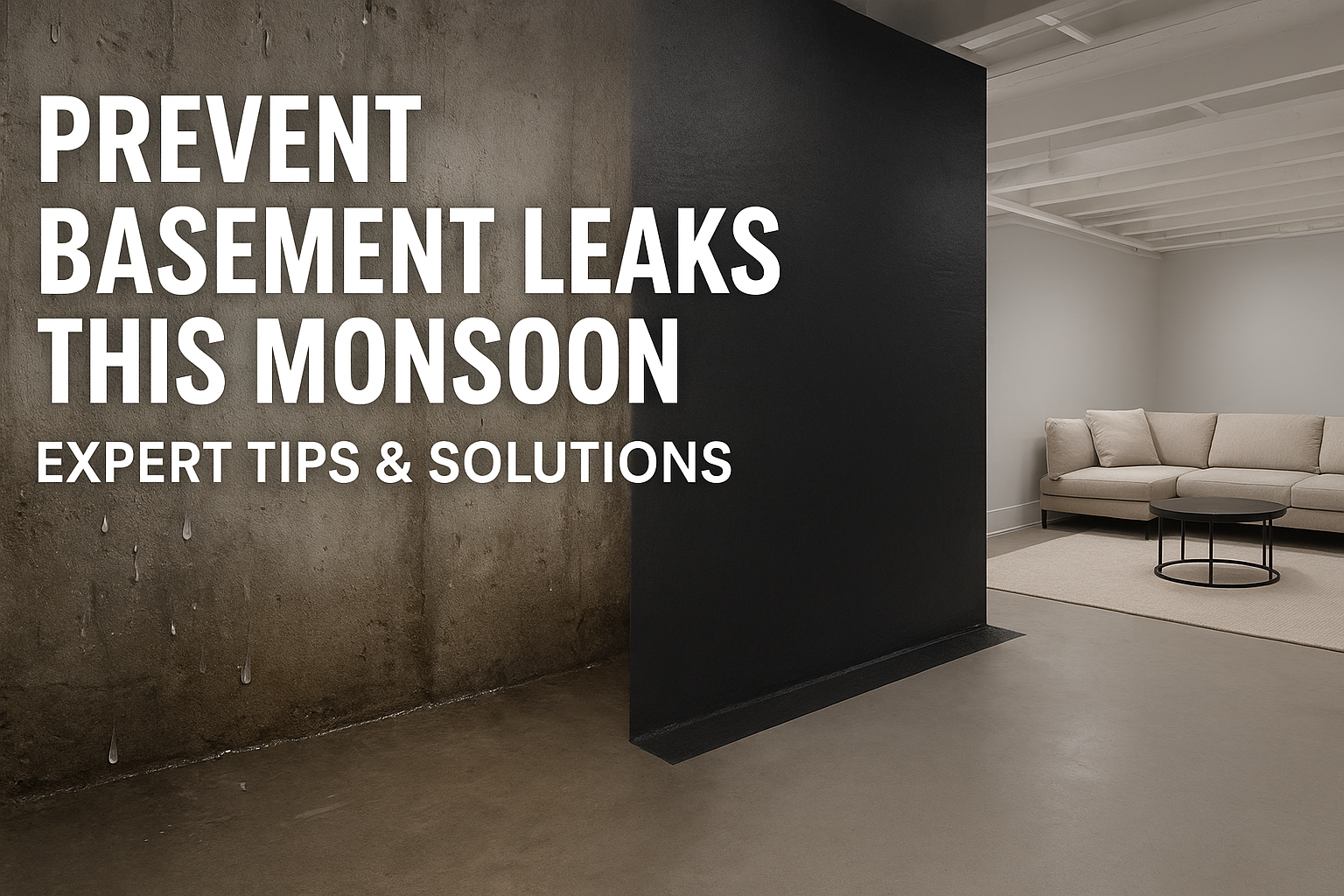
Basement Waterproofing During Monsoon: Causes of Leakage & Proven Fixes
Essential Waterproofing Strategies to Prevent Basement Leaks During Monsoon Season
Why Basements Leak During Monsoon?
Basements are the most vulnerable part of a building during the rainy season. Basement leakage in monsoon occurs mainly due to water seepage through walls, cracks, or floors because of hydrostatic pressure. Here are the common causes:
1. Hydrostatic Pressure
When the groundwater level rises during heavy rains, it exerts pressure on basement walls and floors. Without proper waterproofing, water seeps through.
2. Poor Drainage Around Foundation
Clogged drains, improper slope, and lack of a French drain system cause water accumulation near the foundation, leading to seepage.
3. Cracks in Basement Walls and Floors
Cracks act as easy channels for water to enter. These are often caused by concrete shrinkage, settlement, or structural movements.
4. Inadequate Waterproofing Layer
Absence of high-quality waterproofing membranes or coatings makes basements highly prone to leakage.
How to Prevent Basement Leakage During Construction?
1. Proper Site Grading & Drainage System
-
Ensure soil slopes away from the building.
-
Install French drains or perforated pipe systems to divert rainwater.
2. High-Performance Waterproofing
-
Apply multi-layered waterproofing membranes (APP/SBS bitumen sheets, liquid membranes, or crystalline coatings).
-
Use integral waterproofing admixtures in concrete to reduce porosity.
3. Quality Concrete Mix
-
Use low water-cement ratio concrete with waterproofing admixtures for dense, crack-free walls and flooring.
4. Protective Coatings
-
Add epoxy or polyurethane coatings to enhance basement wall protection.
Best Methods to Fix Basement Leakage in Existing Buildings
1. Crack Injection Waterproofing
-
Use epoxy or polyurethane injection to seal cracks from inside.
2. Internal Waterproofing
-
Apply cementitious or crystalline coatings on walls and floors for additional protection.
3. External Waterproofing (Excavation Method)
-
Excavate soil around the basement and apply heavy-duty waterproofing membranes and drainage boards.
4. Drainage Improvement
-
Install sump pumps and repair or upgrade exterior drainage systems to control water flow.
Maintenance Tips to Keep Basements Dry
-
Inspect basement walls, joints, and floors every year for signs of dampness or cracks.
-
Clean gutters and drainage lines before monsoon.
-
Reapply waterproofing coatings every 5–7 years for long-term protection.
Why Basement Waterproofing Should Be a Priority
A leaking basement can lead to structural damage, mold growth, foul odors, and expensive repairs. Investing in waterproofing solutions during construction or opting for professional basement waterproofing repair services can save huge costs in the future.