3D Printed Concrete: The Future of Construction
The construction industry is witnessing a technological revolution, and 3D printed concrete is leading the way. Imagine buildings, bridges, and even entire neighborhoods being constructed with precision, speed, and minimal waste—all made possible with advanced 3D printing techniques. But how does this technology work, and why is it gaining global attention? Let’s explore.
What is 3D Printed Concrete?
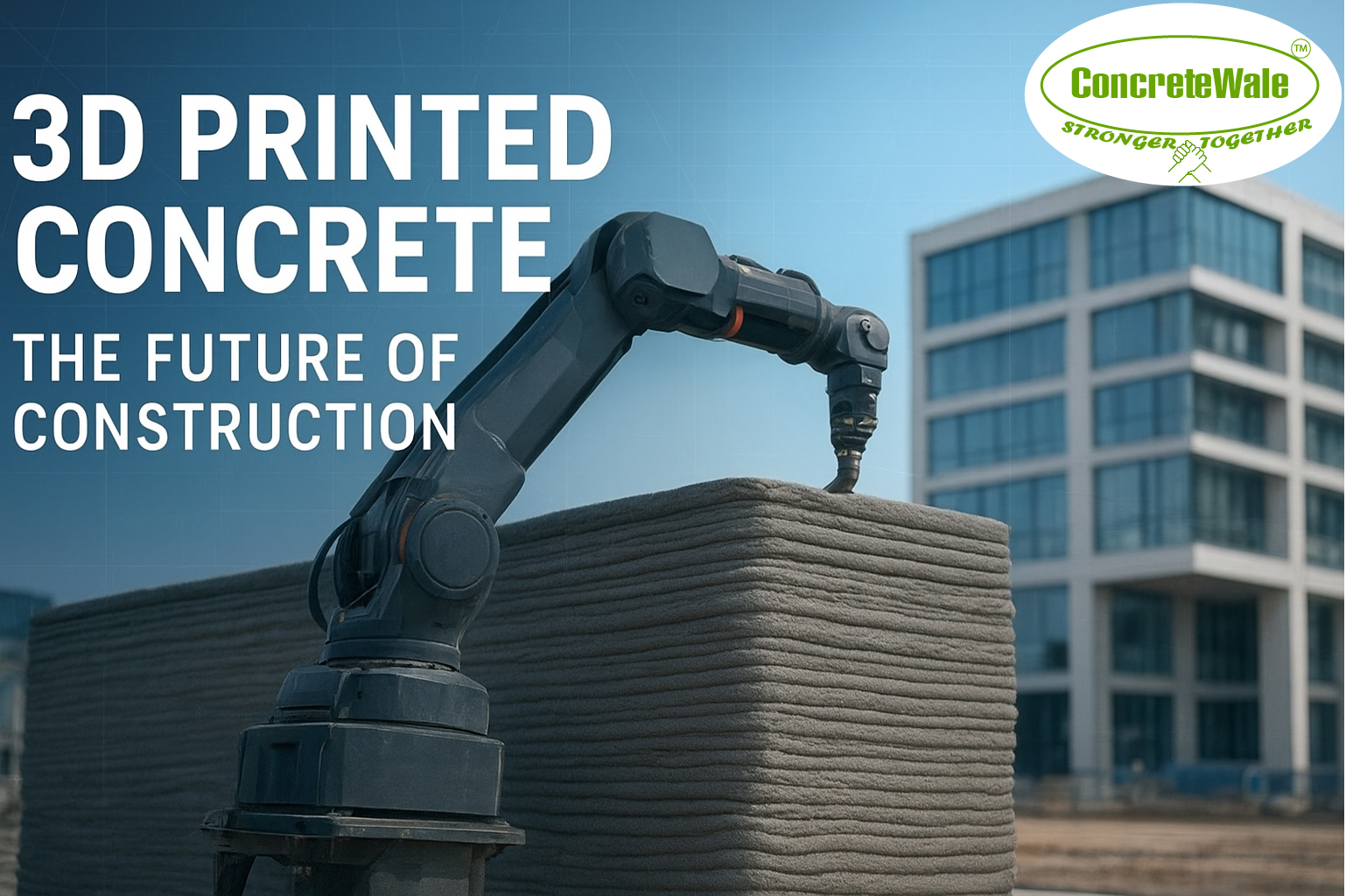
3D printed concrete is a construction technique where specialized concrete is extruded layer by layer using a large-scale 3D printer. Unlike traditional construction, which relies heavily on formwork, scaffolding, and manual labor, 3D printing allows architects and engineers to create complex shapes and structures directly from a digital design.
Key features include:
-
Layer-by-layer deposition: Concrete is printed sequentially, allowing for unique designs and curves.
-
High precision: Digital models ensure exact dimensions and alignment.
-
Customizability: From furniture to entire buildings, every structure can be tailor-made.
How Does 3D Printed Concrete Work?
The process involves several steps:
-
Digital Design: Engineers create a 3D model of the structure using CAD software.
-
Material Preparation: A special concrete mix is prepared, optimized for pumpability, fast setting, and structural strength.
-
Printing: Large-scale robotic arms or gantry printers extrude the concrete layer by layer.
-
Curing & Reinforcement: Depending on the design, fibers or reinforcement can be integrated for added strength.
-
Finishing: Once printed, surfaces may be smoothed or coated for aesthetics and durability.
Advantages of 3D Printed Concrete
-
Faster Construction
Traditional construction projects can take months or even years. 3D printing reduces construction time significantly, sometimes completing walls or small buildings in days. -
Reduced Material Waste
Since concrete is deposited only where needed, material wastage is minimal. This makes 3D printing both cost-effective and environmentally friendly. -
Complex Designs Made Easy
Curved walls, intricate facades, and organic shapes that are difficult or expensive with conventional methods can be easily achieved. -
Labor Efficiency
Fewer workers are needed on-site, reducing labor costs and minimizing human error. -
Sustainability
3D printed concrete structures often require less energy and raw material, supporting sustainable construction practices.
Applications of 3D Printed Concrete
3D printed concrete is no longer a futuristic concept—it’s already being used worldwide. Some notable applications include:
-
Residential Construction: Printing entire homes in record time.
-
Bridges & Infrastructure: Curved and modular structures that are durable and visually striking.
-
Emergency Shelters: Quick-deploy housing for disaster-struck areas.
-
Decorative Elements: Customized facades, furniture, and landscape structures.
Challenges in 3D Printed Concrete
Despite its advantages, there are some hurdles:
-
Material Limitations: Not all concrete mixes are suitable for 3D printing. The mix must be pumpable yet set quickly.
-
Structural Reinforcement: Integrating steel reinforcement is challenging, limiting certain load-bearing applications.
-
Regulatory & Standardization Issues: Codes and standards for 3D printed structures are still evolving in many countries.
-
Initial Costs: Large-scale 3D printers are expensive, though long-term savings can offset initial investment.
The Future of Construction
The potential of 3D printed concrete is immense. As technology improves, we can expect:
-
Faster urban development with reduced costs
-
Innovative architectural designs previously deemed impossible
-
Eco-friendly construction with minimal waste
-
Integration with AI, robotics, and smart sensors for intelligent building systems
The rise of 3D printed concrete signals a paradigm shift in construction, promising a future where buildings are faster to construct, more sustainable, and creatively designed than ever before.
3D printed concrete is not just a technological novelty—it’s a transformative tool reshaping the construction landscape. For builders, architects, and engineers, embracing this technology can lead to cost savings, faster project completion, and innovative design possibilities.
At Concretewale, we are committed to bringing the latest trends, innovations, and services in concrete to our audience. 3D printed concrete represents a glimpse into the future—a future where construction is faster, smarter, and more sustainable.